Tutorial – “Rosie the Riveter” Clothespin Doll
Location: Rosie the Riveter Visitor Center at the World War II Home Front National Historical Park
Event Date: June 7, 2025
Visit the Rosie the Riveter Historic Park’s page here, https://www.nps.gov/rori/index.htm
Visit the Ardenwood Regional Preserve's page here, https://www.ebparks.org/parks/ardenwood

I participated in a unique handmade tradition, a Clothespin Doll activity at the 25th Rosie the Riveter Festival held in Richmond, California. I thought the activity was fun and easy to share with others. The activity was developed and adapted by the East Bay Park District – Ardenwood Regional Preserve.
This activity connects youth and the community to the history of Rosie the Riveter legacy through the making, assembly process, and future play. Using accessible materials for this craft makes learning history easier. Makers will use their fine motor skills and their aesthetic to craft the doll’s hair, draw the face, tie the bandana, and style the oversized outfit. A finished doll appears playful wearing an oversized outfit (see Figure 1).

The Materials List has relevant historic elements, including the American flag colors (red, white, and blue), denim fabric for industrial wear, and the polka dot pattern of the World War II time period.
Materials List for Doll
Clothes
- Pre-cut, lightweight denim (shirt and pants/skirt)
Accessories
- Red ribbon with polk-a-dots (scarf or bandana)
- Red yarn (wrap belt)
Doll
- Wood clothespin (body)
- Pipe cleaner (arms)
- Grey or black hair from sheep (hair)
Grey hair from Gotland sheep and/or black hair from 50/50 Wensleydale and Bluefaced Leicester sheep living at the Ardenwood farm.
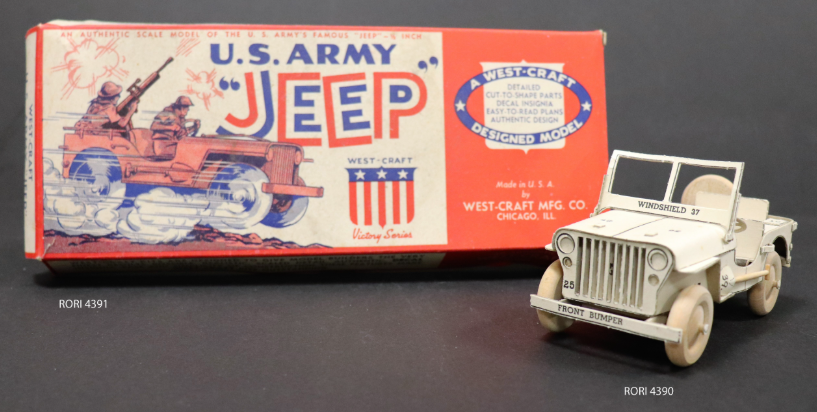
Along with clothespin dolls that were a popular toy in the 1940s due to materials rationing, do-it-yourself toy sets made of cardboard were popular (see [1], Figures 2 and 3). The instructional nature of toy sets led kids to be resourceful, adding common household items to their assembly process.

Here are a few questions to inspire science, engineering, and design thinking for this activity:
Why are the colors – red, white, and blue – used?
Why is the Rosie doll’s outfit made of denim fabric (like jeans today)?
Since the Rosie doll’s body is a cylinder, what is being used to hold the large pieces of fabric in place?
Did you experience troubleshooting while assembling the Rosie doll? (e.g., fix pieces that fell off, or issues with the size of the doll vs. the fabric proportion)
References
[1] Lauren Cabral. The History of Clothespins. Backthen History. September 26, 2022, accessed September 6, 2026; https://www.backthenhistory.com/articles/the-history-of-clothespins


Comments